

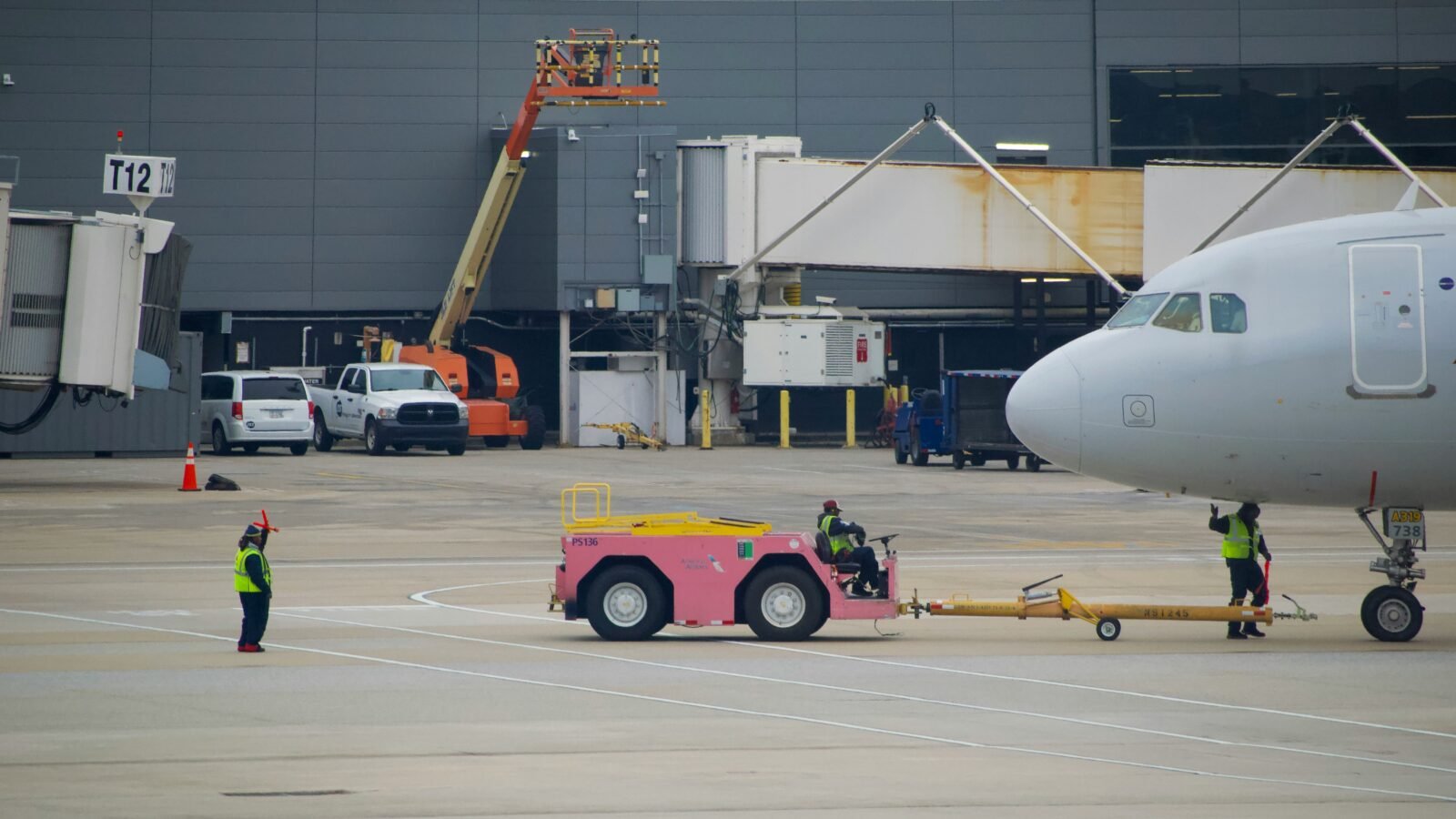
Aircraft tugs are important ground support equipment in aviation, quietly powering the movement of aircraft when their engines sit idle. These robust vehicles handle heavy lifting when it comes to maneuvering aircraft safely across airport grounds. The importance of these machines in modern aviation operations extends far beyond simply moving planes from point A to point B.
Here are four reasons why aircraft tugs are used in aviation.
1. Enhanced Safety During Ground Operations
Safety remains the cornerstone of aviation operations, and aircraft tugs play a vital role in maintaining secure ground operations. Aircraft engines create powerful exhaust blasts during taxiing, generating serious hazards for ground personnel, nearby equipment, and other aircraft. These jet blasts pose more than a mere inconvenience. The high-velocity winds they generate can transform busy airport areas into hazardous zones. Aircraft tugs help eliminate this risk entirely by moving planes with their engines completely powered down, creating an instantly safer environment for all ground personnel. The precision control offered by tugs provides another layer of protection against aircraft damage during complex ground movements. Tug operators maintain superior visibility and maneuverability compared to pilots who must navigate large aircraft through confined spaces using engine power alone. This enhanced control significantly reduces the likelihood of incidents involving ground equipment, terminal structures, or adjacent aircraft. The resulting improvement in safety records translates directly into reduced insurance costs and a more secure operational environment, delivering tangible benefits that aviation facilities can measure both in terms of safety performance and financial savings.
2. Significant Fuel Conservation and Cost Reduction
Fuel expenses represent a major portion of aviation operational budgets, consuming substantial financial resources throughout the year. The traditional practice of running jet engines during taxiing operations requires considerable amounts of aviation fuel for every movement between gates, hangars, and runways. Aircraft tugs present a more economical solution by facilitating aircraft movement without any engine operation, resulting in substantial fuel savings. These savings become particularly significant when calculated across entire fleets handling multiple daily flights, creating a compelling financial argument for tug implementation. The advantages of using tugs extend well beyond immediate fuel savings. The reduction in engine operation time leads to decreased wear and tear on these sophisticated power plants, effectively prolonging their operational lifespan. Aircraft engines have been specifically designed for flight conditions, and excessive ground operation can accelerate their deterioration and increase maintenance requirements. The reduced engine hours achieved through tug usage result in lower maintenance expenses and extended intervals between major engine overhauls, creating additional long-term cost benefits for operators.
3. Improved Operational Efficiency and Flexibility
Modern airports function on precisely coordinated schedules where operational efficiency directly influences different elements. Aircraft tugs enable swift aircraft movements without the delays associated with engine warm-up sequences or pilot preparation protocols. Ground teams gain the ability to initiate aircraft repositioning immediately after gate arrival or parking, creating a streamlined and more responsive ground handling process. This operational adaptability proves particularly valuable during intense peak travel seasons when efficient gate management and aircraft positioning become crucial factors in maintaining schedule reliability. The versatility of aircraft tugs encompasses numerous operational scenarios where traditional engine-powered movement might prove impractical or unfeasible. Ground operations teams may use LEKTRO aircraft tugs when precise aircraft maneuvering becomes necessary in confined spaces or challenging environments.
4. Space Optimization and Infrastructure Protection
Airport property commands premium prices, and spatial constraints persist as ongoing challenges at most facilities. Aircraft tugs enable airports to maximize their existing space utilization by facilitating precise aircraft positioning in locations where self-powered movement would prove impossible. The ability to maneuver aircraft into compact parking configurations, maintenance areas, and storage locations allows airports to accommodate additional aircraft within their current infrastructure. This space optimization capability grows increasingly vital as air traffic volumes continue to expand while opportunities for facility expansion become increasingly limited and cost-prohibitive. The protective benefits that aircraft tugs provide to airport infrastructure contribute significantly to extending the lifespan of essential facilities and surfaces. The powerful exhaust streams from aircraft engines create sustained damage to pavement surfaces, terminal buildings, and ground support equipment through prolonged exposure. These high-temperature exhaust flows and intense air movements gradually deteriorate concrete surfaces, compromise building exteriors, and generate loose debris that creates additional operational hazards. Aircraft tugs help eliminate these destructive forces during ground operations, resulting in reduced maintenance requirements and extended service life for critical infrastructure components.
Conclusion
The integration of aircraft tugs into modern aviation operations represents a fundamental shift in ground handling practices that delivers multiple benefits. As the industry continues to evolve and adapt to changing operational demands, these versatile machines will remain at the forefront of airport ground handling solutions.